Die-Cast vs Extruded Aluminium Housings: Which One Fits Your Part
This is the question that separates a supplier who can read a drawing from one who can only read a price list. The answer is not a preference — the geometry of the part decides, and the decision has consequences for tooling, wall thickness and heat.
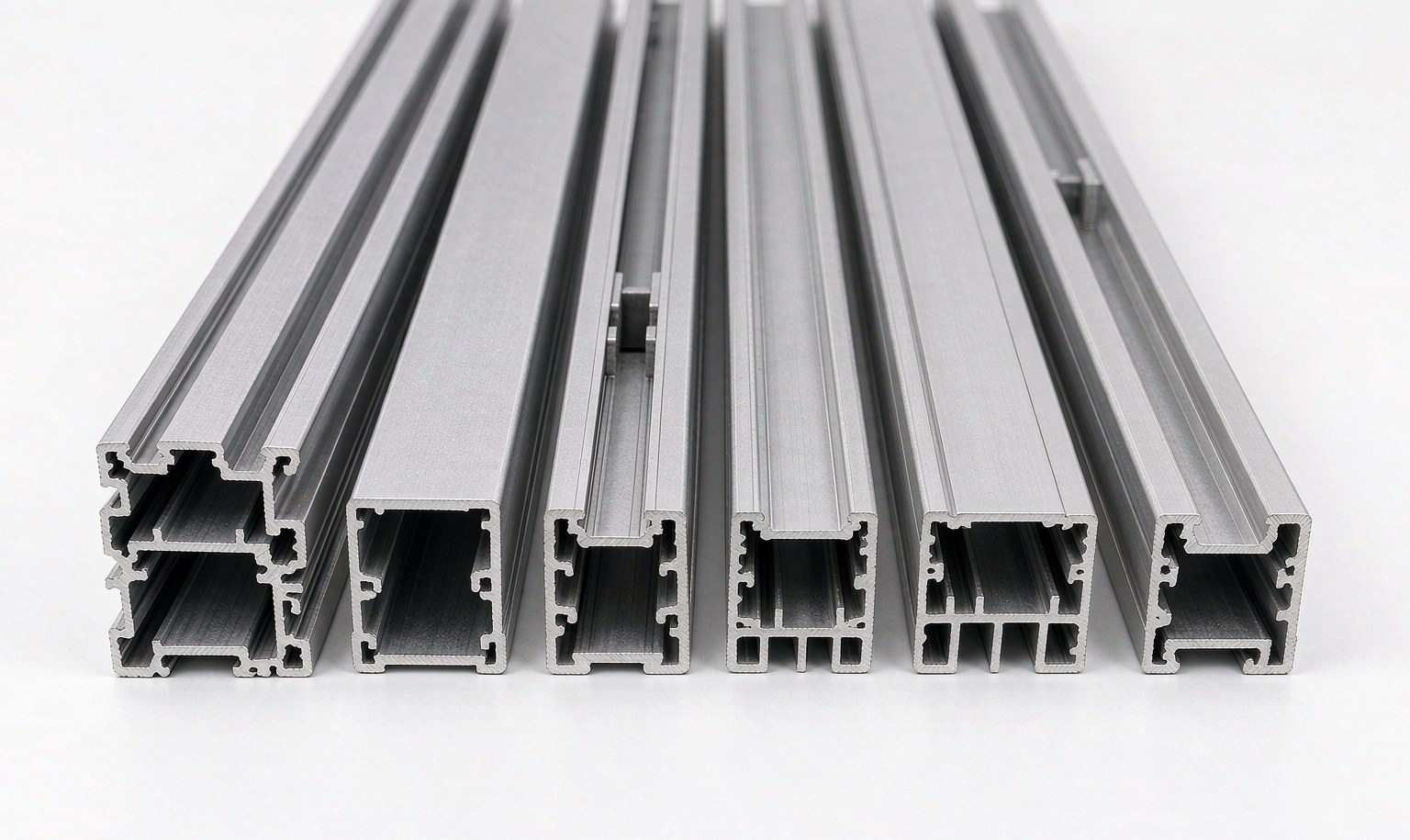
The short answer
Die-casting suits complex three-dimensional shapes and produces a seamless body with good heat spreading. Extrusion suits constant cross-sections such as linear and track profiles, and is generally more economical for long runs. The choice depends on the geometry of the part, and on little else.
The practical test is simple: if you sliced the part at any point along its length, would every slice look the same? If yes, it is a candidate for extrusion. If the shape changes along its length — a reflector cone, a mounting boss, a stepped body — it is a candidate for casting.
What die-casting is good at
- Three-dimensional geometry. Internal bosses, ribs, mounting features and stepped profiles can be formed in one piece rather than assembled.
- Heat spreading. A seamless body conducts heat away from the light engine with no joint in the path.
- Part consolidation. Features that extrusion would need to add as separate parts can be cast in.
- Tighter integration. The cut-out, the reflector seat and the mounting interface can be defined in a single tool.
The trade-off is a tool. A casting needs its own mould, and that mould is the subject of tooling cost and ownership questions that should be settled before a project starts rather than during it.
What extrusion is good at
- Long runs at constant section. The die is a fixed cross-section, so the economics improve with length and volume.
- Length flexibility. A profile can be cut to the run length the ceiling grid needs, which suits linear lighting where the layout drives the size.
- Standard families. Where a section is already tooled, there is no tooling cost and the part can be qualified quickly.
- Consistent finish along a run. An anodised or coated profile presents a uniform surface over a long length, which matters visually on a continuous line of light.
Heat, wall thickness and finishing
Both processes can achieve the wall thickness and finish a commercial housing needs, but they get there differently. Casting can vary thickness locally, putting material where the heat is. Extrusion produces a uniform wall, so thermal performance is designed into the section itself — which is why linear housing sections often show visible fins or mass where the board sits.
On finishing, extruded profiles are commonly anodised, while cast bodies are usually powder-coated; both can be done either way depending on the specification. Where colour consistency between batches matters, the coated route and its per-batch records are the part to ask about.
When neither is the right answer
Some parts are better served by a different process entirely — a spun body rather than a die-cast one, or a pressed steel form rather than aluminium. A supplier who can identify that is more useful than one who quotes every process the same way, even when the answer means the part is not theirs to make. It is worth asking directly, and judging the answer you get.
What to send if you are not sure
Send the drawing, or a 3D file, or a physical sample. The geometry answers the question, and it is usually a matter of minutes rather than a study. What the answer then determines is the tooling position, the realistic wall thickness, the finishing route and the lead time.
Frequently asked questions
What is the difference between die-cast and extruded aluminium housings?
Die-casting suits complex three-dimensional shapes and produces a seamless body with good heat spreading. Extrusion suits constant cross-sections such as linear and track profiles and is generally more economical for long runs. The choice depends on the geometry of the part.
How do I know which process my housing needs?
Slicing the part along its length answers it: if every slice looks the same it is a candidate for extrusion; if the shape changes along its length it is a candidate for casting.
Which process is cheaper?
Extrusion is generally more economical for long runs of constant section, and needs no tooling where the section is already tooled. Casting involves a mould, quoted as a one-off tooling cost, and suits shapes extrusion cannot produce.
Related reading: die-cast surface mounted housings, extruded aluminium profiles.