Second Source Strategy: How to Qualify a New Housing Supplier
Single-sourcing a lighting housing is a bet on one plant's calendar, one set of moulds and one quality habit. Most brand owners only discover what that bet cost them the week something goes wrong — a mould is damaged, the line is full in peak season, or a coating batch drifts and there is nowhere to move the order. A second source is the insurance against that. But it is insurance you have to underwrite in advance, and most brands qualify one badly: they order a sample, it looks right, and they call it qualified. This guide is the sequence that actually de-risks the part — and the one precondition almost everyone skips.
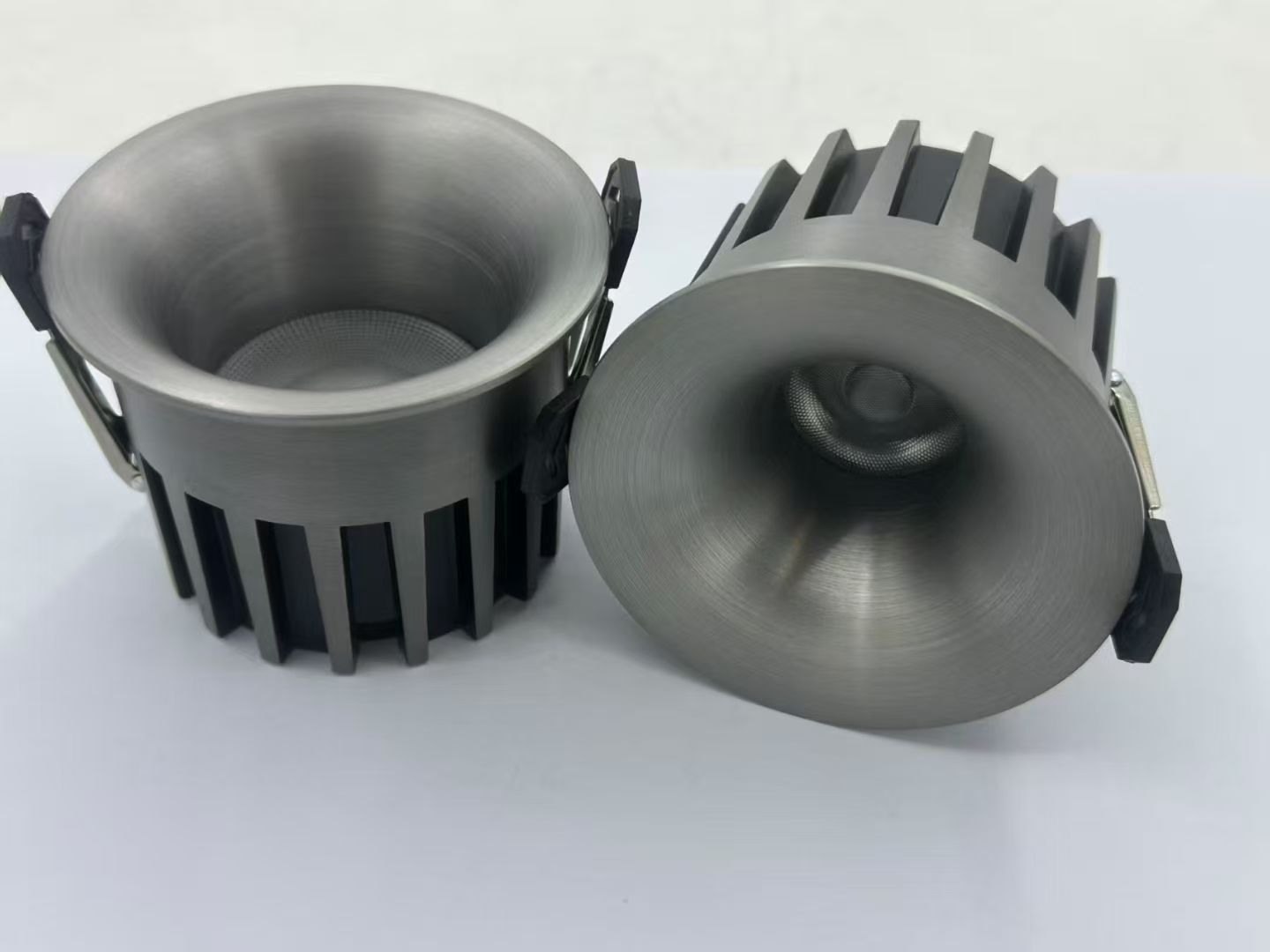
What a second source buys you — and what it does not
It is worth being precise about the risk you are buying against, because a second source does not fix every problem and it does not automatically produce a better price.
| Risk event | Single-source exposure | What a qualified second source buys |
|---|---|---|
| Mould damage, fire, extended power cut | Your ship date has one answer: none | A qualified line that already holds the specification and the approved sample |
| Peak-season capacity crunch | Your order quietly slips down the queue | Parallel capacity you can shift volume to without re-qualifying |
| Quality drifts on the incumbent | No leverage, nowhere to move the part | A measured benchmark to compare the incumbent against |
| Key person leaves the supplier | Knowledge of your part walks out with them | A written specification that belongs to you, not to a person |
What it does not buy: a second price you can always use as a lever, and protection you can invoke if the specification was never written down. A second source with no documented specification is just a second supplier you hope behaves the same.
The precondition almost everyone skips: a specification you own
This is the step that decides whether a second source is possible at all, and it is almost always skipped. A second source can only be as good as the specification you can hand it. If your current supplier holds the drawing, the approved sample and the inspection criteria, you do not have a specification — you have a relationship. Relationships do not transfer; specifications do.
So before you approach a second supplier, check that your own file contains five things. If it does not, getting them is the first task, and it is worth doing regardless of whether you end up qualifying anyone:
- A drawing with a revision number and the critical dimensions marked, not a marketing photo or an old sample.
- The approved first-article sample, retained physically, from the run you signed off.
- A finish and colour reference — a powder code, a panel, or a retained coated part.
- Inspection checkpoints with acceptance criteria — what is measured, and what counts as a pass.
- The packing, labelling and loading spec, because the last failure in the chain is often the carton, not the part.
Everything after this point is easier if the file exists. Nothing after this point works if it does not.
What you need to duplicate — and what you do not
The instinct is to duplicate everything, including the factory. That instinct is expensive and largely unnecessary. What you are buying from a second source is identical output, not identical operations.
| Element | Duplicate? | Why |
|---|---|---|
| Form, fit and function — cut-outs, interface, mounting | Yes, exactly | These decide whether the part assembles. Nothing here is negotiable. |
| Finish, colour and texture | Yes | Two sources must be visually interchangeable on the ceiling, not merely "both black". |
| A retained approved sample | Yes — one per source | The sample is the acceptance reference. Each source keeps one from its own approved run. |
| Tooling | Only if your design must have it | Standard profiles and common housings usually run on existing tooling. See the next section. |
| Internal process, plant layout, headcount | No | You buy output. How a supplier arranges its own floor is not your specification. |
| The paperwork structure | Yes — in form, not in wording | You want comparable records: checkpoints, measured values, pass or fail — in the same shape from both sources. |
The four-stage qualification sequence
Run these in order, and treat each stage as a gate. A supplier that stalls at stage one is telling you something useful before you have spent money on tooling or samples.
| Stage | What you send | What should come back | The gate |
|---|---|---|---|
| 1. Paper | Drawing with revision, target volumes, destination market, certification route | A feasibility note, tooling position, lead time and MOQ — in engineering language | Specific questions about the drawing come back, not just a price |
| 2. Sample | The same drawing, plus your finish reference | First-article samples with measured dimensions against the critical callouts | Measured against the drawing, not judged by eye; approved sample retained by both sides |
| 3. Pilot | A small order in real packaging, to the real destination paperwork | Goods plus the inspection records and loading photos from that run | Records exist per checkpoint, and the cartons match the packing spec |
| 4. Parallel run | The same SKU, split across both sources | Comparable batches from each, side by side | The parts are interchangeable on the line — not merely similar in a photo |
Stage four is the one brands skip, and it is the one that matters most. A second source is not proven by a sample; it is proven by a second batch, produced on an ordinary week, arriving interchangeable with the first source's output.
The tooling question — the gate that decides whether this is even possible
Everything above is straightforward for a part that uses existing tooling, and genuinely constrained for a part that does not. There are only two cases, and they lead to different conclusions.
- Standard profile or common housing. If your part runs on a section or a body that is already tooled — a magnetic track section, a standard panel size, an established spotlight housing — a second source can qualify against existing tooling and there is no new tooling investment. This is the cheapest and fastest second source to build, and it is where most brands should start.
- Proprietary tooling. If your part needs its own mould or die, then the tooling is the whole question. If it was charged to you, ownership and exclusivity belong in the quotation, in writing. If it is not yours, a second source cannot be built on it — you would be asking someone else to make the same part on a tool they do not hold.
The practical consequence: decide tooling ownership before you need a second source, not after. It is a contract term, not an emergency measure.
The trap: qualifying a second source on the sample alone
A sample that arrives on time and looks right tells you very little about the thing you are actually managing. The failures that matter show up later, and they are not visible in a first article:
- Batch two. Colour and finish drift is a batch phenomenon. One sample cannot show it.
- A change request. How a supplier handles a revision tells you whether engineering answers, or a price does.
- An exception before loading. Something is out of specification two days before the container. What happens next is the real product.
- A quiet substitution. An alloy or a component swaps for a cheaper equivalent with no notice. Only records catch this.
So judge the second source on the same things you would judge the first on: the documented process, the records, and the way deviations are raised. A sample proves a factory can make one good part. Records prove it makes five hundred the same way.
Keeping a second source alive
A qualified source that never receives an order stops being qualified. Tooling gets repurposed, staff turn over, and the retained sample quietly ages. Insurance you let lapse is not insurance.
The cadence is modest: place a small order at least once or twice a year to keep the part in production memory, re-confirm the drawing revision against your file, and refresh the retained sample when a run is approved. It costs very little and it is the difference between a second source you can switch to and one you would have to re-qualify from scratch at the worst possible moment.
Where JUNKE fits
JUNKE Global is a Shanghai-based supplier and exporter of commercial lighting housings, reflectors and profiles. Because we work with existing tooling for standard tracks, profiles and housing families, we are often brought in as a second source that does not require you to duplicate a tooling investment — you send the drawing and the approved sample reference, and we qualify against them.
Our quality and supply chain page documents the four inspection checkpoints we record on housing orders and what travels with each shipment, and the OEM / ODM page shows how a project runs from enquiry to shipment and lists exactly what to send for an accurate quote. One honest note: if your part depends on proprietary tooling that is not yours to move, we will say so at enquiry stage rather than quote around it — a second source you cannot legally build is not a favour.
Frequently asked questions
Is a second source always worth it for lighting housings?
No. A second source is worth the effort when the part is repeat, the volume matters, and you can document the specification yourself. For one-off or low-volume parts, the qualification cost outweighs the risk it removes, and a single well-run supplier is the better answer.
How long does it take to qualify a second housing supplier?
The engineering part is quick — a feasibility note on a drawing usually comes back within a day or two, and samples within a couple of weeks. The part that takes time is your own file: a drawing with a revision, a retained approved sample and inspection criteria. If those exist before you start, qualification is measured in weeks, not months.
Can I add a second source without duplicating tooling?
Often yes. If your part uses a standard profile or a housing family that is already tooled — a 22 × 25 mm magnetic track section, a common panel size, a standard spotlight body — a second source can qualify against existing tooling and there is no new tooling cost. Proprietary tooling is the case where you must settle ownership and exclusivity in writing before a second source is even possible.
Should I tell my current supplier I am qualifying a second source?
That is a commercial decision, but be ready for the question. If tooling was charged to you, the terms you agreed govern what you may do with it, and a supplier that holds your drawing and tooling legitimately expects visibility. The cleanest position is to have your own documented specification and written tooling terms, so the conversation is about a contract rather than a favour.
Related reading: six checks that separate a supply partner from a pass-through, and the seven-point checklist for choosing a downlight housing supplier.